



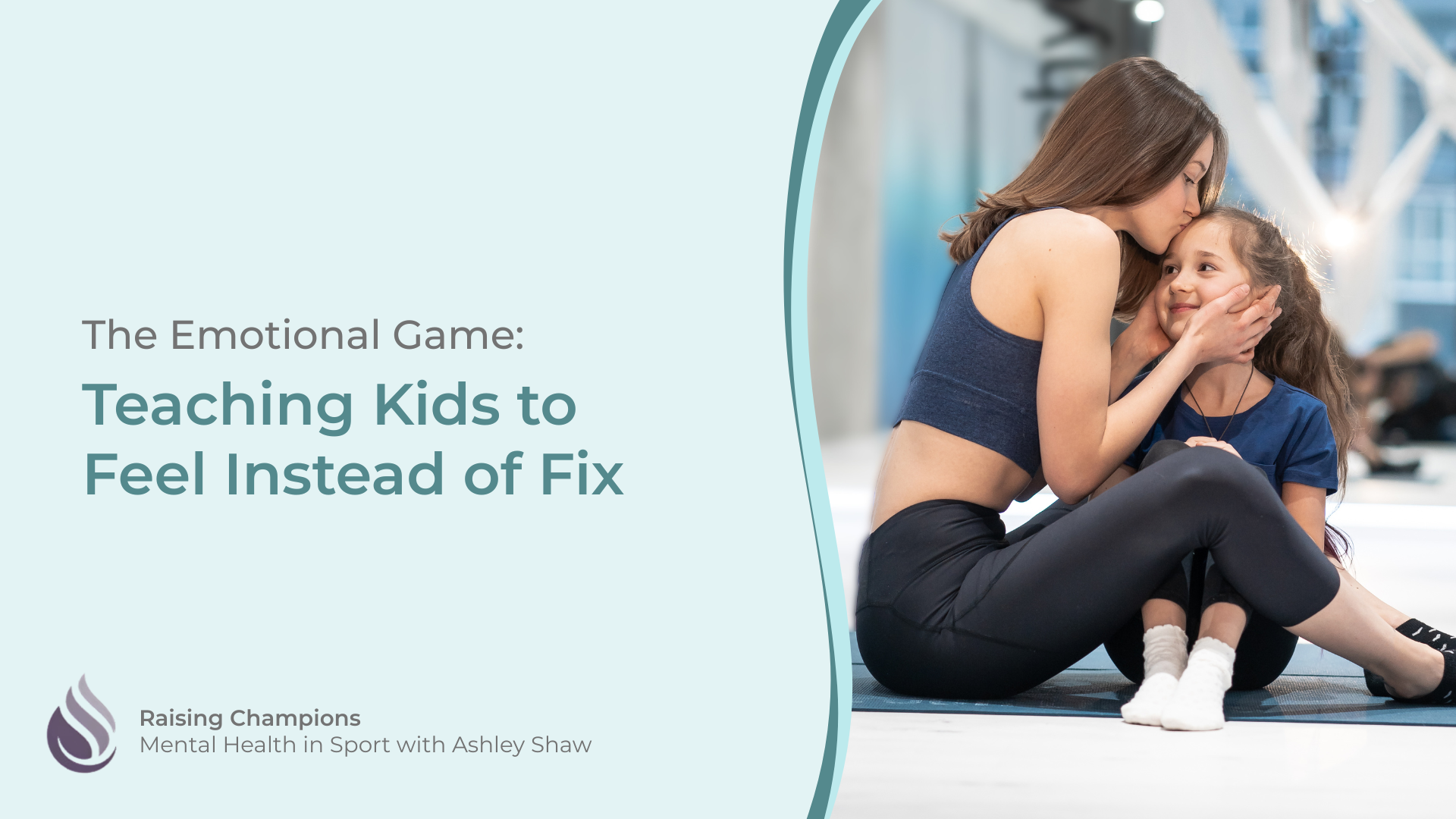
01 Dec The Emotional Game — Teaching Kids to Feel Instead of Fix
A few years ago, I worked with a young hockey player in Calgary who told me, “I don’t get angry — I just play harder.”
He said it with pride.
But weeks later, after a tough loss, he broke down in my office — tears spilling before words did.
That’s when it clicked: he wasn’t angry. He was afraid.
Afraid to disappoint his coach. Afraid to see the look on his dad’s face. Afraid to lose his place on the team.
So many kids I work with have learned to push feelings down and power through.
And on the surface, it works — until it doesn’t.
The Truth About “Mental Toughness”
In Calgary’s competitive sports world, we still glorify “mental toughness.” But toughness isn’t the same as strength.
Toughness means pushing through pain.
Strength means understanding it.
When kids bottle up emotion, they lose access to focus, creativity, and composure — the very qualities that make great athletes.
As a psychologist, I remind parents: emotions aren’t the problem — disconnection is.
The Brain Behind the Breakdown
When kids suppress feelings, their body doesn’t calm down; it just hides the signs.
The stress hormone cortisol keeps running, the heart rate stays elevated, and their brain stays in survival mode.
You can’t coach strategy into a brain that’s in fight, flight, or freeze.
Emotional awareness brings the nervous system back online.
That’s why we teach kids to name emotions out loud:
“I’m frustrated.”
“I’m nervous.”
“I’m disappointed.”
The moment they name it, the prefrontal cortex (the part responsible for decision-making) re-engages.
That’s real self-regulation.
How Parents Can Model It
I often tell parents in my Calgary sessions: you don’t have to fix your child’s feelings — you just have to witness them.
Instead of rushing in with solutions, try:
- “That must feel really hard.”
- “I get nervous before big things too.”
- “I’m proud of you for sharing that.”
When parents model emotional fluency, kids learn that feelings aren’t dangerous — they’re human.
The Ripple Effect
The most powerful athletes I know aren’t the ones who never cry.
They’re the ones who can cry, regroup, and still show up.
In the long run, that’s what builds resilience — not denial.
If your child struggles to express emotions or shuts down after losses, that’s not defiance — it’s protection.
At Still Waters Psychology Calgary, we help athletes and families build emotional awareness so performance and peace can coexist.
No Comments