



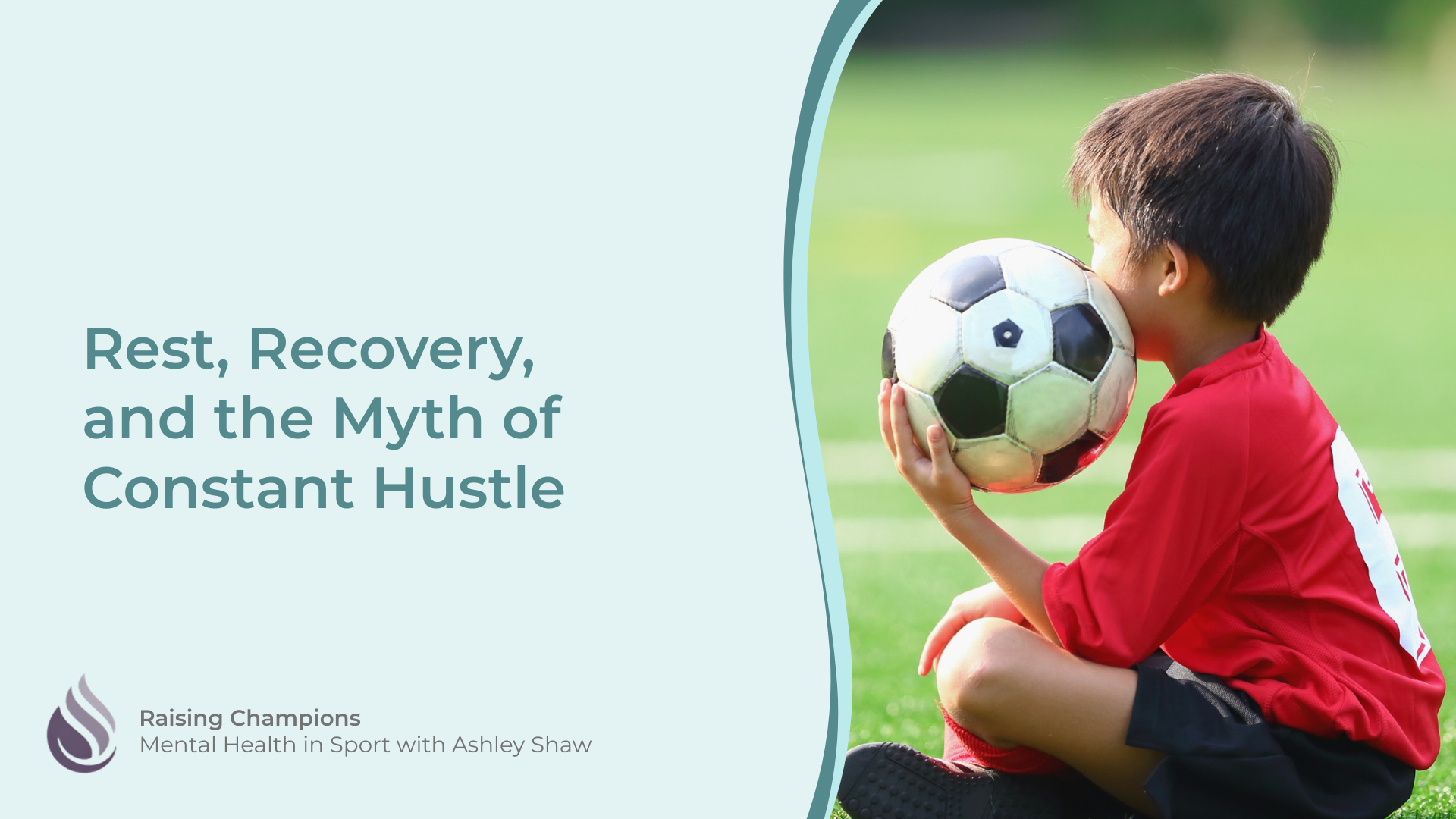
15 Dec Rest, Recovery, and the Myth of Constant Hustle
A 15-year-old skater once sat across from me in my Calgary office and said, “I feel guilty taking a day off.”
She wasn’t being dramatic — she was being honest.
Somewhere along the way, she learned that rest equals weakness.
The Problem with “No Days Off”
In our culture — especially in Calgary — we glorify the grind.
We post #NoDaysOff and reward exhaustion like it’s a badge of honor.
But the brain and body don’t grow under constant strain.
They grow in recovery.
In sport psychology, we call it the “supercompensation effect” — rest is when the nervous system consolidates learning, repairs muscle, and integrates new skills.
No rest = no growth.
What I See in Calgary Families
I see kids falling asleep in cars between practices.
Parents juggling four schedules, eating dinner at 9 p.m. in the parking lot.
It’s not laziness that burns kids out — it’s too much doing.
Athletes need physical recovery, but they also need emotional rest.
Time to just be a kid again — to laugh, sleep, and play without pressure.
A Small Shift That Changes Everything
One runner I worked with noticed started taking breaks between training blocks.
At first, she felt anxious — like she was falling behind.
But over the course of a year, she was running faster, smiling more, and said, “I remember now why I love running.”
That’s the goal — to want to come back.
How Parents Can Support Rest
1️⃣ Schedule downtime the way you schedule training.
2️⃣ Model it — take your own breaks.
3️⃣ Protect sleep — no late-night scrolling, even for adults.
4️⃣ Redefine “lazy” as “recovery.”
Final Thought
Champions aren’t made from overwork. They’re built from balance.
If your child has lost motivation or spark, don’t push harder — pause.
At Still Waters Psychology Calgary, we help families find sustainable rhythms that bring back joy, focus, and energy — in sport and in life.
No Comments